Wednesday, December 7, 2011

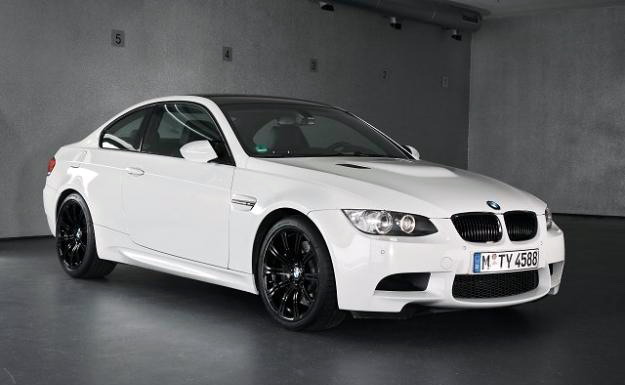
BMW M3 Coupe US Version

BMW M3 Coupe US-Version - BMW once again proves there is nothing inherently slow about evolution with the introduction of the 2008 BMW M3 Coupe, fourth in the line of compact sport coupes that set the standard in minimizing any compromises between race-inspired performance and luxury and convenience!


The all-new 2008 BMW M3 Coupe and BMW M3 Sedan features the first V8 in a series-production BMW M3, and cost $57,275 and $54,575 respectively. It also features driver-adjustable settings for crucial dynamic controls encompassing engine response, steering, damping and stability (with an available steering-wheel-mounted "MDrive" button to store the preferences), and a sporting interior that can be optimized to the driver's desires including the comprehensive entertainment/navigation system operated through BMW's latest iDrive controller!
 Servotronic steering with two manually adjustable control maps
Rear-wheel drive keeps the rack-and-pinion steering of the BMW M3 Coupe free of drive forces. A further enhancement is hydraulic Servotronic power assirtance controlling steering forces as a function of road speed. There is also a choice of two different control maps activated through normal and sport modes with a console-mounted button.
In Sport mode the BMW M3 provides direct and immediate response with a relatively high steering effort. In the Normal mode, power assistance is comfort-oriented and requires less steering effort.


Interior design oriented an active driving experience with luxury

The interior of the BMW M3 has always been a place designed for performance driving, but without compromising the comfort of the driver and the passengers. The new BMW M3 Coupe continues this tradition with the latest innovations. The four seats are surrounded by powerful contours and flowing lines highlighting in particular the concave and convex surfaces. The horizontal lines dominating the area around the dashboard as well as the harmonious surfaces of the side linings give the interior a dynamic note.

The cockpit control area tapers out between the front seats into a newly designed center console which discreetly "swings" towards the driver. Finished in black leather, the console harmoniously continues the instrument surrounds and the control area in terms of both color and shape, comprising three function switches (Power, DSC, and optional EDC) for activating and deactivating the electronic driving programs on the side facing the driver.
Apart from the clear design and optimum ergonomic arrangement of all controls and instruments, the choice of colors inside the new BMW M3 Coupe helps the driver concentrate on driving. Regardless of the upholstery and trim color, the footwells, parcel shelf, headliner, A-pillar trim and the upper part of the instrument panel are all finished in Anthracite. This uniform, dark color scheme around the windshield helps the driver focus on driving.
There is no question as to the heritage of the vehicle upon opening the door of the new BMW M3 thanks to the M car logo in the door sills. The unique nature of the vehicle carries to the dash where the dual circular instruments typical of BMW - the speedometer and fuel gauge as well as the tachometer and oil temperature display - are in specific M style. A feature typical of BMW M cars is the variable warning zone on the tachometer that informs the driver of the recommended engine speed depending on the engine oil temperature. The borderline between the yellow pre-warning zone and the red warning zone moves up as a function of increasing oil temperature to the maximum limit of 8,300 rpm. The digital displays presenting the time, the outside temperature and odometer, as well as the various warning lights, are positioned between the two circular instruments.

The M3's leather steering wheel, with its thumb contours resting firmly in the driver's hands, provides an optimum grip for precise movement of the steering wheel. The spokes within the steering wheel incorporate the remote control buttons for the audio system and mobile phone, as well as the optional MDrive button. An additional auxiliary button may be programmed through the optional BMW iDrive system.
As an option, both the front seats are available with backrest-width adjustment, while the rear seats may be equipped with folding seatbacks which provides the 15.2 cubic foot luggage compartment even greater capacity.
A premium AM/FM/single-disc CD audio system comes standard with an auxiliary input jack. Individual entertainment options include SIRIUS satellite radio, HD radio and a USB-enabled port for control of an Apple iPod or iPhone media player. These three options can be bundled together in the Technology Package, should one choose to have them all together.
For vehicles equipped with Navigation, the comprehensive information and entertainment systems are controlled by the refined BMW iDrive. Selecting the Navigation/iDrive option also brings the performance-oriented, steering-wheel-spoke-mounted Mdrive button.

Safety begins with the body structure and continues inside

Occupant safety begins with the design of the new BMW M3's body structure. Together with defined deformation zones, the use of high-strength steel ensures smooth and direct transmission of forces in a collision and optimum absorption of loads acting on the car. The space available for deformation is also used to avoid any damage to the passenger cell and keep damage to the body itself to a minimum, even in a severe collision.

Tuesday, December 6, 2011

Ford Shelby Mustang

The Mustang that carried the Shelby name were truly amazing cars. The Shelby Mustangs were symbols of Detroit’s ability during the muscle years to build cars that were a cut above the ordinary. Today, everywhere Shelby Mustangs go, they stop traffic and turn heads. People who restore these cars know they’ve brought something very special back to life. This Mustang magic is what led Charles and Liz Lambert to become a two Mustang family: “The blue color catches peoples’ attention a little bit and then you can see them looking. When I come behind Liz in the Shelby you can see the jaw fall down. That’s the awesome part. Catch ‘em when this comes behind the blue one.”The Shelby Mustang is a fascinating chapter in what is already the best success story in muscle car history!


The option list included several power train combinations; the buyer could choose a 3 speed or four-speed manual transmission]] ($115.90 or $188.00 with six-cylinder or eight-cylinder engines, respectively) or the three-speed Cruise-O-Matic automatic transmission ($179.80 or $189.60). The standard six-cylinder engine could be replaced with a 164 hp (122 kW) 260 in³ (4.2 L) for $116.00 or a 210 hp (157 kW) 289 in³ (4.7 L) V8. Boasting the V8 and four-speed manual, the Mustang Road & Track recorded a 0-60 mph (0-96 km/h) time of 8.9 seconds, with the standing quarter mile in 17 seconds at 85 mph. Starting in June 1964, the new 271 hp (202 kW) "K-code" High Performance engine became available. At $442.60 (not counting the mandatory four-speed transmission you had to get on a K code engine) it was the single most expensive Mustang option, and only 7,273 of the 680,992 Mustangs sold in 1965 were equipped. With a skilled driver, K-code/4-speed equipped Mustangs could do 0-60 in around 6 seconds, and put down mid 14-second ¼ mile times with ease.


Other options included: limited-slip differential, styled wheels and wheel covers, power steering, power brakes, air conditioning, center console, a vinyl top, various radios, a bench seat, and various other accessories. Disc brakes for the front wheels became optional later in 1965. The list would continue to grow through much of the Mustang's history, in which added trim packages like the Interior Decor Group (or "pony interior") and GT package (which included disc brakes, a handling package with stiffer springs, shock absorbers, stiffer front anti-roll bar, fast-ratio steering, and duel exhaust . Additional engine choices and convenience items are well known for the Mustang.


Also available during that two-year period was another homologation special for the up-and-coming sport of Trans-American sedan racing. The Boss 302 was Ford's attempt to mix the power of a muscle car with the handling prowess of a sports car. The automotive press gushed over the result, deeming it the car "the GT-350 should have been." Boasting a graphic scheme penned by Ford designer Larry Shinoda, the "Baby Boss" was powered by an engine that was essentially a combination of the new-for-1968 302 in³ (4.9 L) V8 and topped with cylinder heads from the yet to be released new-for-1970 351 in³ (5.8 L) "Cleveland". This combination meant that the Boss 302 was good for a conservatively rated 290 hp (216 kW) through its four-speed manual transmission. Ford originally intended to call the car Trans Am, but Pontiac had beaten them to it, applying the name to a special version of the Firebird. In the ¼ mile the Boss 302 could post very similar times to the Boss 429, oddly enough, despite the smaller displacement and an incredibly free-breathing induction system in the car. It should be noted that the blocks from these cars are incredibly strong, and Ford Racing plans on selling new Boss 302 blocks in the near future!!

Chevrolet Impala

The Chevy Impala went roaring into 1963 as the number one car in America!
General Motors had discovered back in the late 50s that to stay number one they would have to redesign their cars every two years. The ’63 models from Chevrolet took the market by storm and everyone from Corvette to Impala had new lines and new features. Chevy’s Impala was now a full grown luxury car. But it started out as an upgrade to the Bel Air in 1958 and it had now become one of the world’s finest automobiles. Chevrolet was the world’s largest automobile company and they spared nothing to make the Impala into the most popular, best selling car in America.


The ’63 Impala was bigger and heavier by almost 100 pounds, with larger bumpers and more chrome and stainless steel trim. The Super Sport still had plenty of ID and let everyone know that this was top of the line. The re-shaped tail panel still sported Chevy’s usual three tail outs on each side and the very popular Super Sport roof line was carried over from 1962.
The exception was the Z24 option package available in combination with the standard Z03 Super Sport package. Starting in 1967, through 1969, buyers of Z24s Impalas got cars badged as "SS427" models. The SS427 included heavy duty suspension and other performance goodies, as well as a Turbo-Jet 427 in either L36 or L72 variations. Special SS427 badging inside and out were the rule, but few were sold, since "muscle car" enthusiasts were looking toward big-block intermediates like the Chevelle SS396 and Plymouth Hemi Roadrunners, which were lighter and subsequently faster off the line. Interestingly, Z24 cars could be ordered without the Z03 SS package, which meant SS427 equipment but no bucket seats or center console!


The Impala is often credited with starting the muscle car era, although the credit for that really goes to Pontiac when it released the GTO. In the 1960s, gasoline was cheap and consumer demand for power exceeded the need for efficiency. Buyers were clamoring for as much room, performance, amenities and quality as they could get for their dollars. Afraid it would lose out to an in house competition, Chevy released its muscle car, the SS, soon after. In 1961, the Impala SS (Super Sport) was introduced to the market. The SS badge was to become Chevrolet's signature of performance on many models, though it has often been an appearance package only. The Impala's SS package in 1961 was truly a performance package, beginning with the high-performance 348 in³ (5.7 L) engines (available with 305, 340, and 350 hp (230, 255 and 260 kW)) or the new 409 in³ (6.7 L), which was available with up to 425 hp. The package also inclued upgraded tires on station wagon wheels, springs, shocks and special sintered metallic brake linings. Starting in 1962, the Impala SS could be had with any engine available in the Impala, right down to the 235 in³ 135 hp inline-6. With one exception, from this point until 1969, the SS was an appearance package only, though the heavy-duty parts and big engines could still be ordered..

Pagani Huayra 2014

Pagani Huayra Roadster is a new car from Pagani is ready to be launched later in the year 2014 with the title of Da Vinci. This car has the features and specifications of views, so that consumers will be loyal to await the arrival of this car later. Some limitations also have the car, using the name Da Vinci means that this car will turn into moniker when it was released later. Not only does it refer to the Quechua wind but Also another vehicle,a prototype Designed by Argentinian Heriberto Pronello for Ford in 1969


The powerful 700 horsepower bi-turbo engine will have the same sequential sever speed gearbox and will be fitted on the same chassis made of carbon fiber and titanium. The gull-wing doors will be replaced by a pair of some more “Made on Earth” doors and the detachable’s roof extra weight might affect the performance a bit

Like with the coupe version, the Huayra roadster will be powered by the same AMG sourced 6 liter V12 Bi-Turbo engine that delivers a total of 700 HP and 737 lbs-ft of torque. The only problem with this engine setup is that it will suffer due to the added weight of the convertible roof. The coupe sprints from 0 to 60 mph in less than 3 seconds, so the roadster version will probably come in a bit higher than that. The coupe’s top speed of 220 mph will also suffer.


Prices
he Pagani Huayra coupe is priced at about $1.4 million, so the roadster version should come in at about $1.5 million. Of course, we’ll have to wait until 2014 to get the official numbers.

Saturday, December 3, 2011

LUXURY CAR Renault Twingo (2012)


The new Renault Twingo is the first vehicle in the range to feature a new design brand identity. The car will be sold in early 2012, and includes a number of features that force cars unveiled at the most recent concept, and that will be a visual sign of all Renault cars in the future.Outside, the front end of the New Twingo has taken particular inspiration from the new design approach. On the hood of the car, the Renault diamond both are significantly larger and more upright. Black background highlights the badge and brand by presenting a strong, confident. Like the first generation Renault Twingo, new arrivals end features, expressive front draw. Dynamic, funny character is underlined by the fog lights and side lights are now positioned on the round side of the grille. The 'petals' of the lights also contribute to the distinctive appearance of this new Renault Twingo.Warm, new colors and the original called Bermuda Blue Fuchsia has been added to the existing range, and bring a touch of light hearted fun city car's characteristics. Depending on the market, the New Twingo can be equipped with an electrically operated sunroof fabric as an option.

At the rear, there are new lights in addition to the main cluster. Located on the tailgate, they increase the line of Renault New Twingo and echo the front end, bringing an extra form and blow into the car. With a rounded rear bumper and a more curved shape to the bottom of the back door, softer lines. Among the different options 24 alloy wheels and wheel trim, one very assertive new design wheels (black diamond effect) contributes to improved aerodynamics and reduced CO2 emissions.


Inside, the Twingo is brightly enhanced through the harmony of color and materials. All coatings option has its own personality. The chair features new patterns, with edging in contrasting colors to choose. All stitching, and leather or TEP panel, co-ordinated. Colors are also featured on the door inserts and climate control and heating control systems. Lateral air vents that come in different tones, depending on the market (Black Gloss, Majorelle Blue, Green Anis, gunmetal), and their control detailed in chrome. Depending on the market, a higher level of equipment offers interior treatments clearly distinguished: masculine and sporty in the case, Dynamique Renault Sport, GT and Gordini choice, or more comfortable and feminine with the Privilege and Initiale package.

Since its launch, Twingo is the build quality has become one of the greatest features, and this is now clearer than ever in the interior finish, as exemplified by the dashboard that has been enhanced through the use of quality materials, more substantial and higher.

A Twingo FOR EVERYONE

New Renault Twingo view introduces a new collection of five stickers on the side of the roof of the ten options that are available. Each is factory installed and reveal personality, bold attractive, with a contrasting motif offers a different visual atmosphere. Two of the decals can be coordinated with the interior and upholstery.

Customers can also choose different colors for the door mirrors and tips from the side protective molding, with a color that contrasts with the main body color. Is the 'radical' or 'graphic', the end result will not only be completely private, but also guaranteed to be elegant. Personalization system will be launched through a fun, online configurator. Renault makes customization easy reach thanks to an attractive price that will allow each owner to say - "That's my Twingo!"

Interior space and versatility to hit a bull's-eye

Renault Twingo The new design combines compact exterior dimensions with impressive spacious interior. City car is very roomy provide knee space 22 inches, which placed among the very best segment. Meanwhile, the Twingo's reputation has always been sealed through its flexibility of displaying separate, independent sliding, 50/50-split rear seat, Twingo is very practical, too. Boot capacity can extend 230-959 dm3, while many drawers and ingenious solutions are available as options combine to make the perfect partner for both walking and shopping for travel to the country.

Punchy, economical and even more respect for the environment

The powerplants are featured in the new Twingo Renault range means it is more than capable of devouring long distances. 1.2 TCE 100hp engine, which boasts peak torque of 155Nm is available from low revs, giving the driving pleasure of a larger engine capacity, but with lower fuel consumption. Twingo superior machine, such as 1.2 16V 75hp petrol engine or the 75 and 85 DCI DCI diesel, has all the benefits of ongoing improvements. Coupled with the aerodynamic fine-tuning, this work has resulted in significant fuel consumption and greenhouse gas emissions improvement, but not at the expense of driving pleasure. Fuel consumption for the Renault Twingo DCI 75 and 85 (3.4 litres/100km) is important among the most efficient in its class. From the year 2012, New Twingo will reach the benchmark emission standards: 85g of CO2/km for the 75 and 85 DCI DCI diesel-powered version and 102g/km with the 1.2 16V 75hp petrol engine. Renault's new Twingo is one of the only city car will be available with diesel engines Euro5 that combine performance and fuel efficiency.

Practical and versatile

Thanks to a platform that is based on that of Clio, New Twingo maintain best in class status is associated with the handling and ride comfort. It has all the qualities of a long-distance tourer and even offers a better range. Driving economically, can ensure a full tank range of up to 1,000 km (diesel version) or 750km (petrol). Meanwhile, New Twingo Renault compact dimensions and nimble handling ideal for splitting the city traffic, but it is just a lot of elements that are out of town as well.

Consistent with the blessing of time for various multimedia audio system

All the audio systems in the range of New Twingo will display the Bluetooth function and connectivity with USB audiostreaming as standard. This makes it easy to play digital music, from the phone, player or USB stick. In this area, also, Renault New Twingo provide the same features as the model of Renault on the other segments. As an option, the audio system can be used as a docking station for iPod Touch iPhone and the latest generation. This audio system allows the use of GPS navigation thanks to an iPhone application developed by Renault. This application uses Bluetooth to communicate with and analyze the behavior of car drivers 'eco-driving' in real time with a view to providing fuel-saving tips.

Renault Twingo display quality

Since its launch, Renault Twingo has enjoyed much acclaimed reliability and level of exceptional customer satisfaction, as confirmed by the long list of studies and surveys. ADAC Germany, for example, considers reliability Twingo to have ranged from 'good' to 'very good' for several years.

Meanwhile, the French magazine L'Automobile Magazine Renault Twingo placing first in his class for the second year in a row in overall quality ratings published in February 2011. The magazine also emphasized that "with the Twingo, Renault has demonstrated its ability to drive one car to the top level of customer satisfaction." Thanks to the concern that paying for the details, the new Renault Twingo is ready to take a quality long associated with the model for a higher standard.